
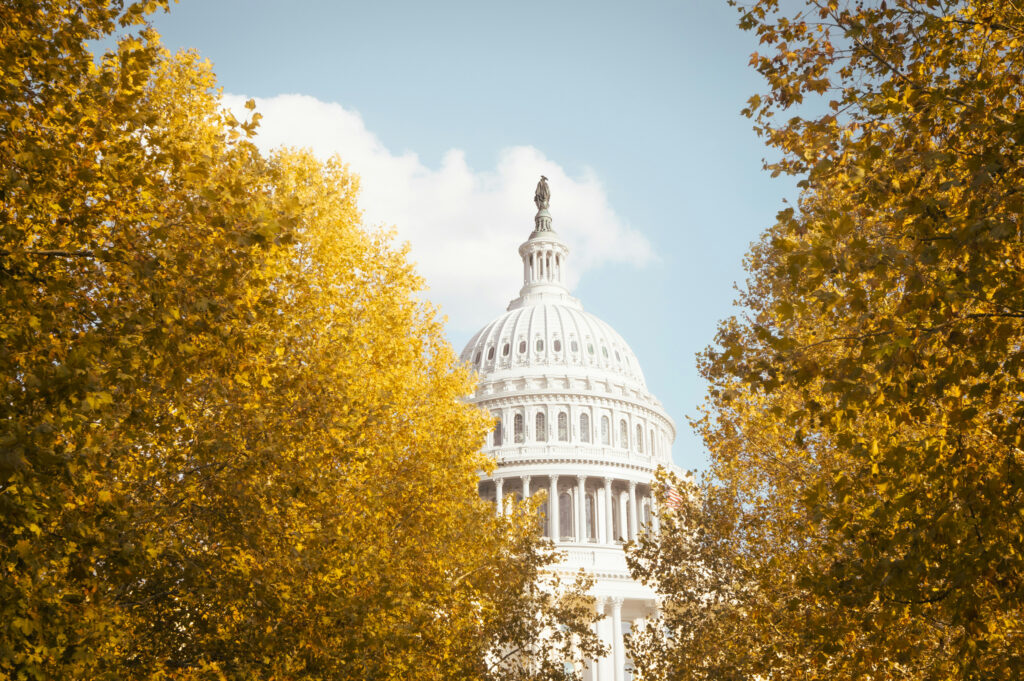
Investing Through Uncertainty
In September, we spoke with Chief Investment Officer Joseph “JP” Powers about the upcoming midterm elections. JP gives perspective on how the lead-up and results might impact investor portfolios and influence risk perception, along with thoughts on how to stick with your long-term plan through uncertainty.
We’re in a headlong rush toward the midterm elections. At the same time, investors are navigating concerns about inflation, interest rates and geopolitical uncertainty. How do you put all of this in perspective?
You’ve highlighted many of the concerns we’re hearing from clients right now. Inflation remains higher than anyone is comfortable with, interest rate policy continues to evolve, and geopolitical tensions remain in focus. The election is certainly top of mind for many investors as well.
I think it’s important to start by putting this election in context. We’re talking about a midterm election cycle, and while elections matter, we shouldn’t assume that a single election outcome is likely to dramatically change the overall economic landscape or resolve the issues investors are most concerned about.
Many of the challenges people are focused on today, whether that’s inflation, global conflicts or broader economic conditions, are unlikely to be meaningfully improved solely by the outcome of a midterm election. That’s why we continue to focus on the factors that tend to drive long-term results: economic fundamentals, corporate earnings and the financial goals that matter most to each client.
Are there specific issues that could be affected by the election?
Certainly. Areas such as immigration policy, trade policy, tariffs and foreign affairs could all be affected to some degree by election outcomes and any subsequent legislative changes.
That said, I think it’s important to distinguish between issues that may be politically significant and issues that are likely to have a meaningful impact on market performance. While elections can influence the policy conversation, we’re generally not expecting to see dramatic market implications the day after election results are announced.
Markets tend to respond more to actual policy changes than to campaign rhetoric. That’s why we try to stay focused on what ultimately becomes reality rather than what is being debated during the election season.
Should investors adjust their portfolios based on election forecasts or concerns about a particular outcome?
Generally speaking, no.
I don’t want to diminish the importance of elections. Every election is important, and everyone should participate in the process. But when it comes to investment management, we want to be careful about allowing political bias to influence financial decisions.
One of the risks during election cycles is that investors become convinced a particular outcome will be either very positive or very negative for markets and then they make portfolio changes based on that belief. Those decisions may not actually be in their own economic best interests.
Election years can certainly bring periods of market volatility, and heightened uncertainty is not unusual. However, we believe investors are typically best served by remaining disciplined, focusing on their long-term objectives, and avoiding short-term reactions driven by political headlines.
Why is it important to separate campaign promises from investment decisions?
Because campaign promises and actual law are often very different things.
During an election season, candidates can put forward any number of proposals and policy ideas. What is discussed on the campaign trail is not necessarily what ultimately becomes law. Even when proposals do make it through the legislative process, they are often revised significantly along the way.
For investors, that means there can be a real danger in positioning a portfolio around something that is still theoretical. We don’t want to make major financial decisions based solely on statements made during a campaign.
Once policies become law and we understand their practical implications, that’s different. At that point we can evaluate whether changes are warranted and whether certain industries or sectors could be affected. But we don’t want to jump the gun before we know what’s actually going to happen.
How much influence do elections and congressional policy really have on markets over the long term?
When you look at markets over long periods of time, there are many factors that influence outcomes, and elections are only one piece of a much larger picture.
That’s part of why I believe midterm elections often generate stronger headlines than investment implications. They can create significant political discussion, but they’re typically not something that should drive wholesale changes within portfolios.
Over time, factors such as economic growth, corporate profitability, innovation, productivity and consumer activity tend to have a larger impact on market performance than any individual election cycle.
That doesn’t mean policy is irrelevant, but it does mean investors should be cautious about assigning too much importance to any single election outcome.
One question investors often ask is whether one political party is better for the stock market than another. What does history tell us?
Both parties would certainly like to stake a claim to that idea, but the historical evidence doesn’t support a clear preference for one party over the other.
When we look back across different administrations and different periods of market history, we don’t see a consistent pattern that says investors should favor one political party from an investment perspective.
In fact, markets have often performed quite well during periods of divided government, where power is shared rather than concentrated in a single party.
One possible reason is that businesses value predictability and consistency. Companies making decisions about hiring, investment, research and development, tax planning, or trade relationships benefit from having a relatively stable policy environment. When policy changes are more measured and require broader agreement, businesses often have greater visibility into the future.
The key takeaway is that successful investing has historically depended far more on staying invested and maintaining discipline than on trying to predict which political party might benefit markets.
This election feels especially contentious. Is this time different?
I honestly can’t remember an election that wasn’t contentious.
What may be different today is the amount of information we’re all exposed to. There is constant news coverage, constant analysis and more commentary available than ever before. No matter where someone falls politically, it’s easy to come away believing that this is the most important election in history.
For some individuals and for certain issues, that feeling may be understandable. But when we’re working with clients, our role is not to get caught up in the political noise. Our role is to determine what is actually relevant to their financial picture and long-term success.
That requires stepping back from the headlines and focusing on what can genuinely affect a client’s goals, retirement plans, family legacy and long-term financial security.
Given all the noise surrounding the election, what role does an advisor play?
I think the value of professional guidance becomes especially important during periods like this.
There is so much information available today that it can be difficult to separate meaningful developments from background noise. Investors are constantly being presented with strong opinions, dramatic predictions and competing narratives.
Our role is to help clients work through those issues objectively. We want to make sure we’re not playing politics in the portfolio and that decisions are being made with a client’s long-term interests in mind.
If someone finds that election coverage is creating anxiety or uncertainty, that’s often a good reason to reach out. A conversation about their goals, progress and overall financial plan can help provide perspective and ensure they’re staying focused on what matters most.
If you could leave investors with one piece of advice heading into the election season, what would it be?
Get out and vote, but don’t vote with your portfolio.
Participating in the electoral process is important. At the same time, investors should be careful about allowing short-term political emotions to disrupt a long-term financial strategy.
Every election cycle brings uncertainty, strong opinions and predictions about what happens next. Yet the principles of successful investing remain remarkably consistent. Staying focused on your long-term plan and avoiding emotionally driven investment decisions will likely serve you well through this election cycle and those still to come.
If election-related concerns are causing anxiety, now is a good time to connect with your advisor, review your plan and make sure your strategy remains aligned with your goals. Ultimately, the focus isn’t the election itself. The focus is helping clients achieve the outcomes that matter most to them and their families.
Thank you, JP!
The information in this communication is presented by RWA Wealth Partners, LLC (“RWA”). The contents are for informational and educational purposes only and are not intended as investment, legal or tax advice. Please consult with your investment, legal or tax advisor concerning any specific questions you may have. Past results are not indicative of future performance. The historical returns of markets generally and of individual asset classes or individual securities may not be an accurate predictor of future returns of those markets, asset classes or individual securities. RWA does not guarantee the accuracy and completeness of any sourced data in this communication.
© 2026 RWA Wealth Partners, LLC. All Rights Reserved.