Podcast: The Human Side of Retirement—Beyond the Numbers
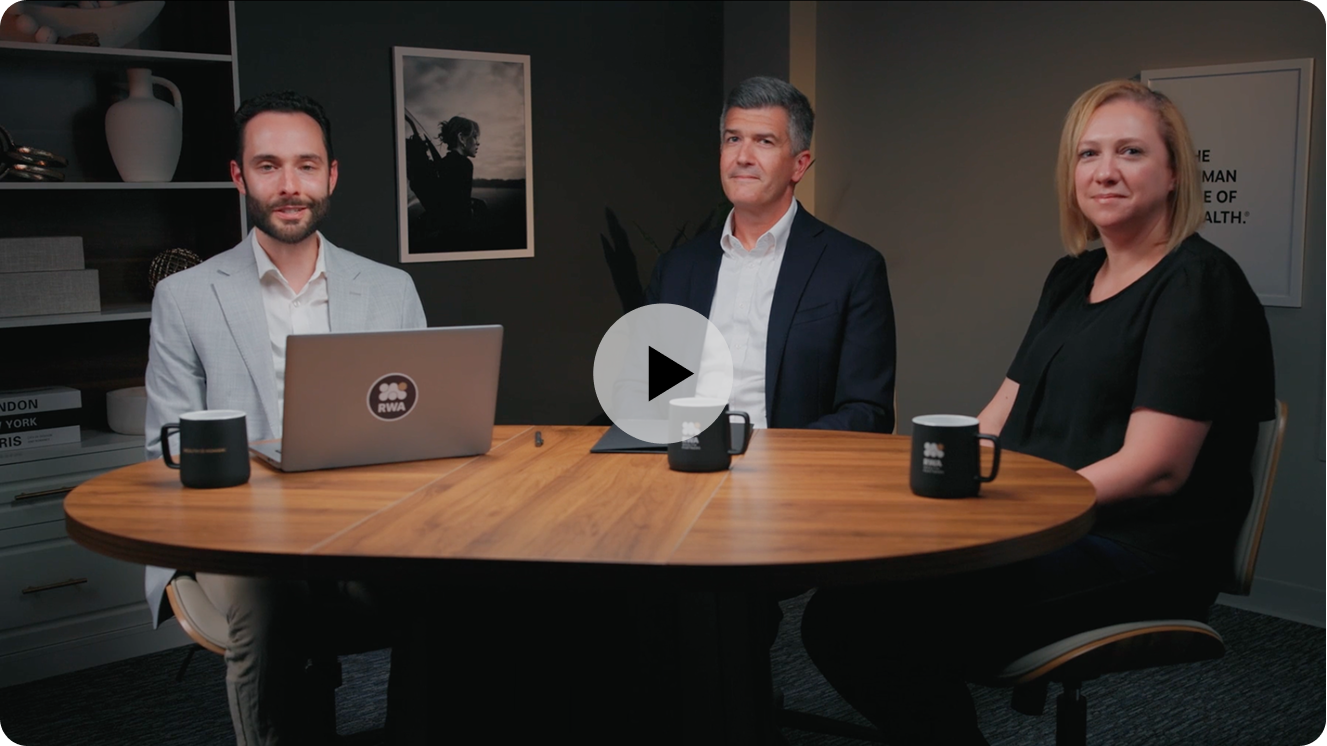
Andrew Busa, Director of Financial Planning, is joined by Dina Milne, Partner and Senior Wealth Advisor, and Steve Reder, President of Private Wealth, to explore the financial and personal realities of retirement.
In this episode of The Human Side of Wealth podcast, the discussion goes beyond savings targets and portfolio balances to address a more important question: what are you retiring to? Andrew, Dina and Steve explore why retirement is one of life’s biggest transitions and why a successful retirement requires more than financial readiness.
The conversation covers the loss of structure, identity and purpose that can accompany leaving work, along with key retirement decisions surrounding Social Security, Medicare, IRMAA, pension elections and Roth conversion opportunities. They also discuss how retirement evolves over time through the “Go-Go, Slow-Go and No-Go” years and why spending patterns often look very different than people expect.
Watch now to learn why retirement planning is about designing the next chapter of life, managing risks that extend beyond the markets, and creating a plan that can adapt over a retirement that may last 25 years or more.
Full Transcript
Read Transcript
Andrew: Welcome to another episode of “The Human Side of Wealth.” My name is Andrew Busa, Director of Financial Planning at RWA Wealth Partners.
Today is all about the human side of retirement.
And so the math behind retirement, yes, it’s important.
Do you have enough to live on? But today, we’re tackling questions like who are you after your career ends? What are you retiring to, and what’s important to you?
So I’m joined by my colleagues, Dina Milne and Steve Reeder.
Thank you both for being here today.
Dina: Glad to be here.
Andrew: Yeah. So guys, these are kind of the behind-the-scenes questions of retirement.
They don’t maybe get as much attention as how much do you need to live on—important…We’ll talk about some of the financial decisions that come along with this as well.
But let’s start off talking about high level sort of retirement as a philosophy. Um, and Dina, when you talk to clients and they talk about retirement, or maybe they ask the question, “When can I retire?” Right.
Andrew: What do you think is behind that question?
Dina: I think there are two distinct parts to that question.
Uh, the first one is, do I have enough money to retire?
There’s definitely that financial component.
But there’s also a psychological or existential side to the question as well.
Like, am I going to be okay? What’s this next chapter about? What am I going to do?
So it’s definitely those two parts together.
It’s a big question.
Lots of answers.
Andrew: Is retirement sort of a passe word almost?
I heard when we were prepping for this, right? We talked about that, right?
Dina: Yeah, I’ve heard several clients have come back and said, “Hey, that’s a bad word.
We don’t want to hear it.”
Because retirement, I think what it used to be about 40 years ago is not what it is today.
Retirement almost feels like an end.
It’s not.
It’s just a start to the next chapter in your life.
And retirement is not the same for everybody.
Some people, it’s complete stoppage of work.
For other people, it’s taking on volunteering opportunities.
For other people, it’s not really all work is done.
They still work in some capacity. So it’s a very different interpretation, very different existence, I think, today.
I think people think of it as like the next phase of your life.
I’m going to live in retirement.
Steve: I think it’s actually a transition. It’s a moment in time.
You make that decision to pivot away from your career, but you’re doing something else.
Most people, it isn’t retirement, where we’re sitting at the beach the whole time or playing golf.
It’s something different. I think that’s the question is what happens after retirement?
Because it is really kind of a moment in time in my mind.
Andrew: Right. It’s interesting because, as you mentioned, retirement, it’s changed probably from a generation ago.
You’re not necessarily collecting a pension now and kind of slowing down and doing all these other things. I think the definition and feeling around retirement has changed, and it’s a long period of time if you’re planning potentially for 30 plus years of no longer working. So how do you help clients through that identity shift, right, from work is who you are to something completely different?
Dina: I think it’s figuring out what they want to do.
For some people, it’s travel. They’re done with work. They want to travel.
They want to enjoy those first 10, 15 years of retirement.
For some people, it’s family.
Taking care of the grandkids and doing activities with the kids.
For other people, it’s projects that they haven’t been able to get to.
When you work, you’re busy. When you have a family, you’re also busy raising a family, working. And so these are things that they haven’t been able to do, and they get to these projects.
So I think it’s through a lot of talking, a lot of identifying of goals. Sometimes it’s hard to vocalize what it is exactly.
There’s something in your mind, but you can’t vocalize it.
And so having the conversation and trying to dig deeper, a lot of these things come out in those discussions, so.
Andrew: When you think about the financial decisions, right, that today’s retirees face, compared to a generation ago, I think there is more complexity. Um, and so wonder if we can spend a few minutes talking about that.
Dina: Absolutely. So first thing is we are living longer.
And so we need to make sure from a financial perspective that we are prepared for that. We have enough saved. We’ve been utilizing our retirement accounts.
If we, for the lucky few that have pensions-understanding how those work, deciding how to take the pension.
Andrew: It’s a good point, right? So when you think about digging deeper with those types of questions, how do you sort of pull that out of, okay, what does that transition to that next phase look like? How do you start kind of designing that next chapter from an identity standpoint?
Steve: It starts with what they enjoy.
You want the retirement years, so to speak, as being happy years.
It shouldn’t be more painful than showing up for a job.
And so when you think about a conversation, it’s what do you envision it looking like?
What are the things you want to do? Who do you want to spend it with?
I think that’s a big one. Where do you want to spend time?
Because a lot of the people we work with in retirement, it’s about spending more time with the people they care about.
And so when we see that, it’s what’s that mean?
Is it in town? Is it out of town? Are they in town? Are they out of town?
Are you traveling? Are you having them at your house? Is it Sunday dinners?
And so just digging deep a little bit about what does happiness look like for you in this? What would you like the next phase to look like?
Andrew: Dina, I’m sure you’ve seen over the years folks who retire and then maybe go back… maybe to work. Where does that kind of go? How does that dynamic work?
Dina: So I don’t see it often.
But when you said that, it actually brings a particular client to mind.
Yeah. For some people, retirement is not the thing.
They can’t figure out what they want to do with their time, or they’re very passionate about what they do. So the client that I’m thinking about, he’s a doctor.
And he’s retired four times.
And none of them have stuck.
But it’s because he enjoys what he’s doing.
And he’s able to continue doing it. So for him, that’s okay.
For other people, sometimes it takes that 6 months to 12 months to kind of figure out their flow.
Figure out what they want to do.
Focus on staying active, too, and having a purpose. I think that’s the other thing.
It’s the purpose.
When you’re working, you have a job, you have a purpose, you have a goal.
In retirement, the trick is identifying what is that purpose? What is my goal?
And it’s there.
We just need to work together and figure it out.
Steve: As an industry, too, we focus on how do you plan for retirement?
And what that typically means is how do you save enough money so that at some point… in time, you can choose to walk away from work.
But we don’t spend enough time focusing on how are you planning for retirement.
Meaning, what are you… going to do in those years? And so I think leading up to it, you should start to task, what do you think it looks like?
And if we’re having a conversation, what’s that mean?
And so for your client, for example, I’m not sure who you’re talking about or what they like to do, but what does day one look like?
What do you think they’ll do the first year?
And test that out.
And if someone says they want to travel a lot, start taking more vacations, see how it feels.
Do you get sick of it after three trips?
Or is it something that you could see yourself doing for 15 years?
Or whatever it might be. And so I think it’s that planning not only for leading up to the retirement, but after you hit the retirement. How are you planning for that?
Are you thoughtful? Are you testing it? Trial runs.
Just make sure it’s something you want to do.
Andrew: Yeah. Well, as we kind of stick on that subject, think about retirement, how it changes over time.
When you think about the spending sort of journey in retirement, you hear about the go-go years, the slow-go years, and then the no-go years, right?
That sort of smile type of graph when it comes to what your spending patterns look like. But we spent some time talking about that as we were prepping for this, and it seemed that anecdotally around the age of 78 to 80 might be sort of a tipping point of where some spending shifts.
Steve: Yeah, I think from in my experience, from what I’ve seen, around 78 is the time
where a lot of people decide the travel piece and the go-go years aren’t as much fun.
It just starts to slow down, generally speaking, around 70.
And I see that pretty regularly. And so when people want to be on the go, be very active, do a lot of travel especially, like that does start to slow down.
Ramping up to that day, you typically have more spending on the front end, and then you’ll see it plateau a little bit as life slows down.
And then it’s a little bit of a crapshoot in the sense of health.
Like depending on your health needs, you could have major health expenses, as it ramps up, or it could stay somewhat flat.
But when I think about enjoying it, what I hate to see is the people that put it off.
They put it off.
And then they wake up one day, and it’s too late.
And they don’t want to do it anymore, or it’s not as enjoyable.
And so I think from the go-go to slow-go to no-go, like I would say the biggest advice I give someone is make sure you’re thoughtful, you plan for it, make sure we budget it. What is the go-go years? What do those look like?
Because you can do a lot during those years.
And we mentioned earlier continuing to work.
I think of retirement for me as more of like, how do I develop the financial freedom… to do what I want to do?
I think for most people, if it’s continuing to work, great, but the job means something a little different to them if they’re not working for financial purposes, to know that you can walk away.
And then even in retirement, if you just make the decision to leave, do you want to work part-time, consult, charity?
But that financial freedom allows them to make the best decisions typically.
But the reality is it’s different for absolutely everybody, what they want to do, and it’s okay. It doesn’t need to look like it looks in the movies or on TV.
It could be something totally different. That’s okay.
But I think it’s really that inner feeling of confidence or I’m going to be okay… that I think allows people to enjoy that time in their life.
Andrew: Traveling never looks like it does in real life as it does in movies I feel like.
Dina, I would bet you probably have a client in every age of retirement, right?
Almost in a sense, right? If I’m thinking about a client from 65 to 85 and plus, right? You probably have someone sort of in every slot of retirement.
So I’m curious what you see from a pattern standpoint as you have now guided clients through this whole thing.
Dina: Yeah, I think it’s exactly as Steve just discussed.
In the early years of retirement, maybe those first 10, 15, people are very active.
Whether it is travel; some people don’t like to travel.
It’s more either just being busy with family or even projects on their homes or other things that they’re doing.
Definitely see that activity is pretty easy at that stage in retirement.
As people get into their 80s, yeah, there are definitely some physical aches and pains that slow you down a little bit.
Luckily, I’m very proud, a lot of my clients are very active, like even into their 80s and a few in their 90s, but they’re definitely slower years.
So it’s more about being closer to family, being a little bit more settled.
You’re probably not spending as much.
And then, you’ve got that third stage where, hopefully not, but possibly you are dealing a little bit with maybe some health things that kind of slow you down a little bit.
Maybe thinking about transitions, if you’re still living in a house that’s maybe not so practical. Transitioning away from that, finding out what that next step is going to be. So yeah, I think it does typically play out the way you just discussed it a little while ago.
Andrew: Let’s pivot and talk a little bit about key retirement decision points… and those that pop up often times early in the retirement years, not always.
But maybe we’ll kind of step through it that way as we think about prepping for retirement, making sure those first several years, those key decision points are done well, often with the help of an advisor.
So I guess at a high level, as you’re thinking about a client who’s maybe they’re two or three years away, how do you start to think about getting those decision points kind of lined up and making sure that they’re organized?
Dina: Yeah, so there’s a lot to think about.
I’ll try to kind of simplify it a little bit.
So I think the first one is throughout your working career, you’ve been saving, you’ve been accumulating. You are now getting to the point where, in two or three years, what you’ve been saving is going to be your income cash flow.
So it’s getting that kind of shift in your approach that we need to get maybe a little bit more defensive, a little bit more conservative. We need to make sure that we have enough, that we’re saving, but also enough to kind of get us transitioned into those first early years of retirement. So it’s shifting the mindset from savings to getting ready to take income.
Another really important one is understanding what benefits your employer provides. So if there is a pension, what options do we have? Do we take an annuity or like a monthly pension, or is there a lump sum option?
There’s no black and white answer to which one to take. It really depends on you.
But doing a little bit of thinking, understanding what those numbers are.
I think another really big one is healthcare.
So it depends when you’re retiring.
If you’re retiring before age 65, when you become eligible for Medicare, you’re going to have to supplement that coverage.
So, if there is a spouse, is your spouse working?
Can you go on their plan? Do you have to find another alternative to cover that care? It can be expensive.
So I think definitely having some discussions around healthcare and what your options are really important.
And then I think the fourth one is also giving a little bit of thought to Social Security… and when to start it. So there are a lot out there.
It’s a lot.
But if you’re working with somebody, your advisor will make it a lot easier for you.
They’ll walk you through it. They’ll prepare you.
But these are some of the things that you should be thinking of, for sure.
Steve: The only thing I’d add onto that is I think we need to think about what the budget’s actually going to be.
There’s a lot of litmus tests people use.
Put your finger in the wind might be one of them.
But understanding that’s very important because the question people always ask is, “Can I retire?”
The answer is, yeah, sure.
You can retire.
But can I retire with the life I want?
The retirement I want?
And so paying attention to how much it’s going to spend, drawing up a kind of a life plan of what do you want retirement to look like?
What are you going to be doing? How much is that going to cost?
And just making sure that we’re testing that because the worst case scenario…
So I started in the industry in March of 2000 was when I accepted my first role in the industry as an advisor. It was basically the top of the market.
And so what I saw was 2000 was a down year, 2001 was a down year, 2002 was a down year. And if you think about retiring, the people that retired in 2000… really rough road ahead, especially if they were planning on living off some of their money because you’re having to sell out of some of your investments as the market’s down, and it dramatically negatively impacts your retirement if something like that happens, and you’re not prepared for it.
So having a budget, making sure you have some liquid assets available, and just really preparing for that moment.
And then you can get a little overexcited in the beginning of retirement.
And I’ve seen people really blow it out the first year, and they blow out their budget the first year.
So you just want to be thoughtful because if you have a good plan, and you can hold yourself somewhat accountable to it, it typically gives people the confidence to go live the life they enjoy.
Andrew: That’s a great point. And Dina, I’m curious from your standpoint, how you’ve coached clients through, they’ve retired, and then a month later, as inevitably there will be, there’s market distress at any time, right? How do you coach clients through that?
Dina: So, we try to get ahead of it. We try to plan, going back to the discussion about changing the mindset from savings to income.
Before retirement, we do try to get a little bit more conservative, not with the entire portfolio, but with a piece of the portfolio that would cover a certain amount of cash flow needed, whether it be a year, maybe sometimes it’s a little over a year for nervous investors. And so we do try to carve out a little bit of that security so that we can weather turbulence in the market like that.
One of the key things, just to follow on the expenses, these are actually the key to a successful retirement. Because if you don’t know how much you’re spending or if you overspend, that is also a problem.
And it’s very hard. I think it’s very hard for a lot of people to figure out exactly what their spending is. And so this is something I think we spend a long time working on… on that exercise and figuring out what the budget is, what miscellaneous costs we can put in there to add a little cushion.
Steve: Yeah, and it’s interesting because you said earlier, some of the differences, like pensions and maybe it’s Social– In previous years, people had a little more of a finite number.
More defined.
Yeah. It’s like, “This is your pension. This is what you can spend.”
“Your Social Security, this is what you’re going to get.” We’re seeing people with much more variances in-… wealth and-… how they can pull from it. And then the fact that they’re pulling from an account, they could drain it to zero.
A pension was there. You couldn’t really overspend most of it.
It came every month.
And so with freedom comes responsibility almost.
Andrew: Yes. Absolutely. It’s a whole different dynamic that we’re planning for, and at a certain level, there are some decisions, there’s some leeway here, but you can only make once.
Potentially. When you’re going to file for Social Security, you mentioned Medicare, right? There’s some wiggle room here to change plans, but at a big high level. The spending thing, that’s like a year to year, often month to month thing that we revisit with someone’s plan when we look at it either every year, every couple of years, when something comes up.
That’s what really happens most of the time, I feel like early in retirement is there’s a lot going on, and we often look at the plan maybe more frequently than we have, or there’s sort of that hot spot a few years before and then a few years after retirement where we’re probably looking at the plan a little bit more often, would you say?
Dina: Yeah, absolutely. And it helps to keep things on track because sometimes another thing that we see is people retire and either they go from one extreme to the other. They either overspend, and there’s this honeymoon phase where we’re doing everything we can, or they underspend.
They’re so worried about overspending their money that they go the other extreme.
So having those constant check-in points, they help toreinforce that-… either clients are okay or people are okay or that we need to tweak something.
Steve: What I like to do is because early on in retirement, you can overspend, and it actually is not going to impact the plan as much, most likely.
So I like to look at the cash flow, and I think the cash flow analysis early on tells you more than anything. I think there’s two things.
One, because overspending over time is going to have a bigger and bigger and bigger impact, and I also think it’s the whole lifestyle creep.
And so if you allow yourself to overspend, it’s hard to pull that back.
It’s hard to course correct. But if you think about how a financial plan works, if you overspend in year one, it’s not going to make a big difference.
Bells and whistles aren’t going to go off in the financial plan.
But if you have a clear cash target that you’re looking to spend and tracking to that. And the one other thing I talk about on that is I think it’s also good for people to create retirement income supplements.
And so if they’re living off of their accounts, set it up so that it transfers, almost like a paycheck, whether it’s biweekly or monthly, a certain amount in there. And I think that’s easier for people to follow of, “Am I overspending or not?” than in a year coming back and saying, “Oh my goodness, I overspent by $150,000.”
“How did that happen?”
Andrew: Yeah. It’s all really good, and I think if there’s one takeaway from this section is there’s more complexity than there was a generation ago.
And one thing that we didn’t spend time on yet, but maybe just a minute, is with tax planning, that piece of it early in retirement.
We get dozens of questions around Roth conversions.
Does that make sense from a lifetime tax planning standpoint?
I know we’re focusing most of this episode on the human side of retirement, but it’d be remiss if we didn’t mention it.
And just how that’s, again, those first five to 10 years of retirement, there’s some really important planning items that should at least be talked about.
Dina: Yeah, absolutely. I think it’s definitely important to understand what taxes are going to look like in retirement as well.
I think that’s where people do get surprised sometimes… if they’re not aware. Social Security can be taxed.
It also depends where you’re drawing funds from.
If you’re drawing them from an IRA, that is taxable as well.
So definitely the tax consequences and tax planning opportunities are really important to consider.
Steve: Yeah, and there’s also ones at this time that may not seem so obvious or may seem counterintuitive, like if you retire early… your income goes away.
You mentioned Roth conversions. You may actually want to create some taxes.
Do bigger conversions because you’re maximizing lower tax brackets.
I think people always want to lower their taxes.
They always want the lowest tax rate. And what can happen is if you don’t recognize some of that when you can, you’re going to have a bigger tax problem later on.
Andrew: Well, we’ve covered a lot of good ground.
We’ve hit the philosophical, we’ve hit some of the key decision points.
Let’s bring this all home with my final question around if you’re talking to maybe someone who’s five-ish years out from retirement.
What should they be thinking about? Or what do you prompt them to think about?
Dina: I think they should be thinking about how they envision this next chapter in their lives, what they want to do, what is it that they can’t do right now that they can do in retirement? And try to build the plan realizing that you’re planning for another 30 years. Retirement’s not like the end.
It’s still another 30 years. So give a little thought to what you want to do, what’s important to you. We can always discuss the financial piece of it.
That’s easy to solve for, but it’s what are you retiring into?
What’s this next phase?
Andrew: Any final thoughts before we leave the viewer?
Steve: Maybe a little bit of a rehash, but I just think of retirement planning as how do I get to retirement?
I think of after retirement, almost more of like a life plan.
Think about what do you want it to look like, and I think that’s where the game’s won or lost and whether or not people are happy at the end of the day.
Andrew: Excellent. Well, Dina and Steve, thank you very much.
And thank you for listening to another episode of “The Human Side of Wealth.” If you enjoyed our conversation, please check out our website at rwawealth.com.
You can contact one of our advisors there and we’d be happy to talk about any of these topics with you. A lot here to uncover. So thanks again for watching.
We’ll see you next time.
Video disclosure:
The information set forth in this podcast is presented by RWA Wealth Partners, LLC (“RWA”). The contents are for informational and educational purposes only and are not intended as investment, legal or tax advice. Please consult with your investment, legal or tax advisor concerning any specific questions you may have. Past results are not indicative of future performance. The historical return of markets generally and of individual asset classes or individual securities may not be an accurate predictor of future returns of those markets, asset classes or individual securities. RWA does not guarantee the accuracy and completeness of any sourced data in this communication.
RWA Wealth Partners logo is a registered trademark of RWA Wealth Partners, LLC.
© 2026 RWA Wealth Partners, LLC. All Rights Reserved.